
When it comes to choosing the right water filtration system for your Tacoma home, you’ve got a few key factors to evaluate. Testing your water is crucial to pinpoint specific contaminants that might affect your family’s health. Do you need filtered drinking water or a whole-house solution? Understanding your needs will guide your selection process, but there’s more to investigate, including system types and budget considerations that could impact your decision.
Understanding Your Water Quality Needs
When you consider your water quality needs, it’s fundamental to identify the specific contaminants present in your water supply. Testing your water is the first step; you can use a home test kit or hire a professional service. Common issues may include chlorine, lead, bacteria, or hard minerals. Knowing what’s in your water helps you choose the right filtration system that targets these contaminants effectively.
Think about your household’s water usage and preferences, too. Do you want clean drinking water, or is it significant to filter water for all household needs?
Evaluating your budget is likewise critical, as some systems can be more costly than others. Finally, consider the maintenance required for the filtration system you choose. Regular upkeep guarantees peak performance and longevity. Additionally, a professional water filtration system installation ensures the system’s optimal functionality, which is crucial for achieving the best results.
Types of Water Filtration Systems
Once you understand your water quality needs, it’s time to investigate the various types of water filtration systems available.
You’ll find several options tailored to different concerns.
Activated carbon filters are popular for their ability to remove chlorine, sediment, and volatile organic compounds, improving taste and odor.
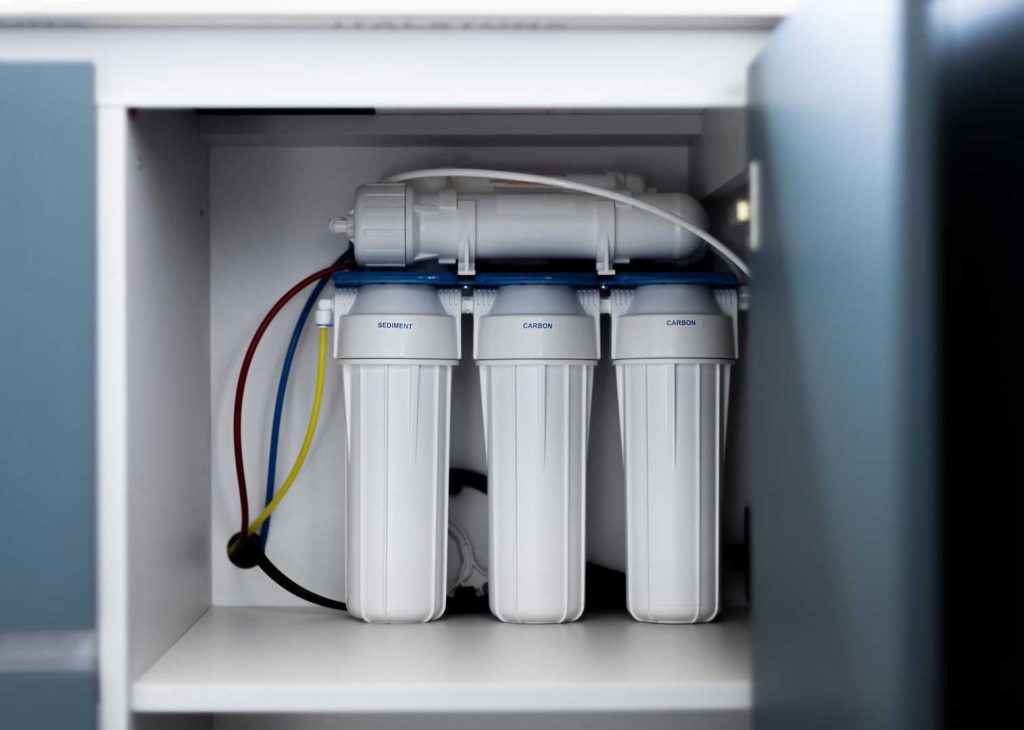
Reverse osmosis systems offer a more advanced solution, effectively filtering out contaminants like lead and nitrates, providing you with purified water.
If you’re looking for convenience, consider a point-of-use filter, which attaches directly to your faucet, delivering clean water on demand.
For whole-house filtration, a system installed at your main water line guarantees every tap delivers filtered water. Each system has its strengths, so choose one that aligns with your specific water quality issues and lifestyle.
Key Features to Consider
As you investigate water filtration systems, it’s vital to take into account key features that directly impact performance and usability.
First, consider the filtration method—reverse osmosis, activated carbon, or UV filtration can each address specific contaminants. Next, look at the system’s capacity; make sure it meets your household’s needs without frequent filter changes.
Pay attention to the flow rate as well; a slower system may disrupt your daily routine. Energy efficiency is another important factor; opt for models that conserve energy while providing clean water.
Don’t forget about certification—look for systems certified by organizations like NSF or ANSI to guarantee they meet safety and performance standards.
Finally, think about the size and design to confirm it fits well in your space. By weighing these features, you’ll make a more informed choice that keeps your family’s water safe and enjoyable. Additionally, considering the benefits of regular maintenance can help ensure your filtration system continues to function effectively over time.
Installation and Maintenance Requirements
Installing a water filtration system often involves several key steps that can vary based on the type you choose. First, you’ll need to decide on the location for installation, typically under the sink or at the main water line.
After gathering the necessary tools, you’ll follow the manufacturer’s instructions to connect the system. If you’re unsure, hiring a professional can guarantee proper installation and compliance with local regulations.
Once installed, maintenance is essential for peak performance. Regularly check filters and replace them according to the manufacturer’s recommendations, usually every six months to a year.
Clean any pre-filters or membranes as needed, and monitor water quality for any changes. You might likewise consider enrolling in a maintenance plan with a trusted service provider, like DEAR Services, to promise prompt assistance and expert care. This proactive approach will help extend the life of your filtration system and maintain clean, safe water for your home. Moreover, utilizing a culture of service can ensure that your emergency plumbing needs are met with care and expertise.
Budget and Financing Options
When considering a water filtration system, it’s crucial to evaluate your budget and available financing options, especially if you’re looking to make a significant investment.
Start by determining how much you can comfortably spend. Water filtration systems vary widely in price, so knowing your budget helps narrow your choices.
Next, investigate financing options. Many plumbing service companies, like Dear Services, offer flexible financing plans that allow you to spread the cost over time, making it easier to manage your expenses.
Don’t hesitate to ask about special offers or referral rewards that can reduce your overall costs.
Additionally, consider the long-term savings. Investing in a quality filtration system can lower your water bills and improve your health by providing cleaner water.
Conclusion
By taking the time to understand your water quality needs and exploring the different filtration options available, you can make a smart choice for your Tacoma home. Don’t forget to take into account installation and maintenance, along with your budget. After all, wouldn’t you want the cleanest water possible for your family? With the right system, you’ll not only improve your water quality but also invest in your family’s health for years to come.